
Yokouri Jutaku [Horizontal Houses for Sale]
2010 | Exhibition
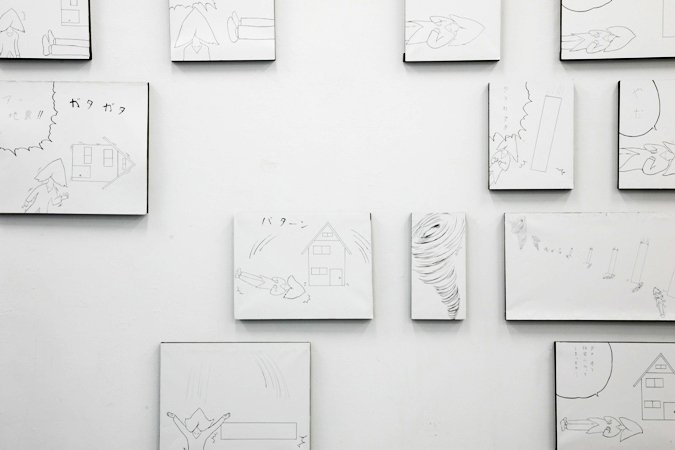
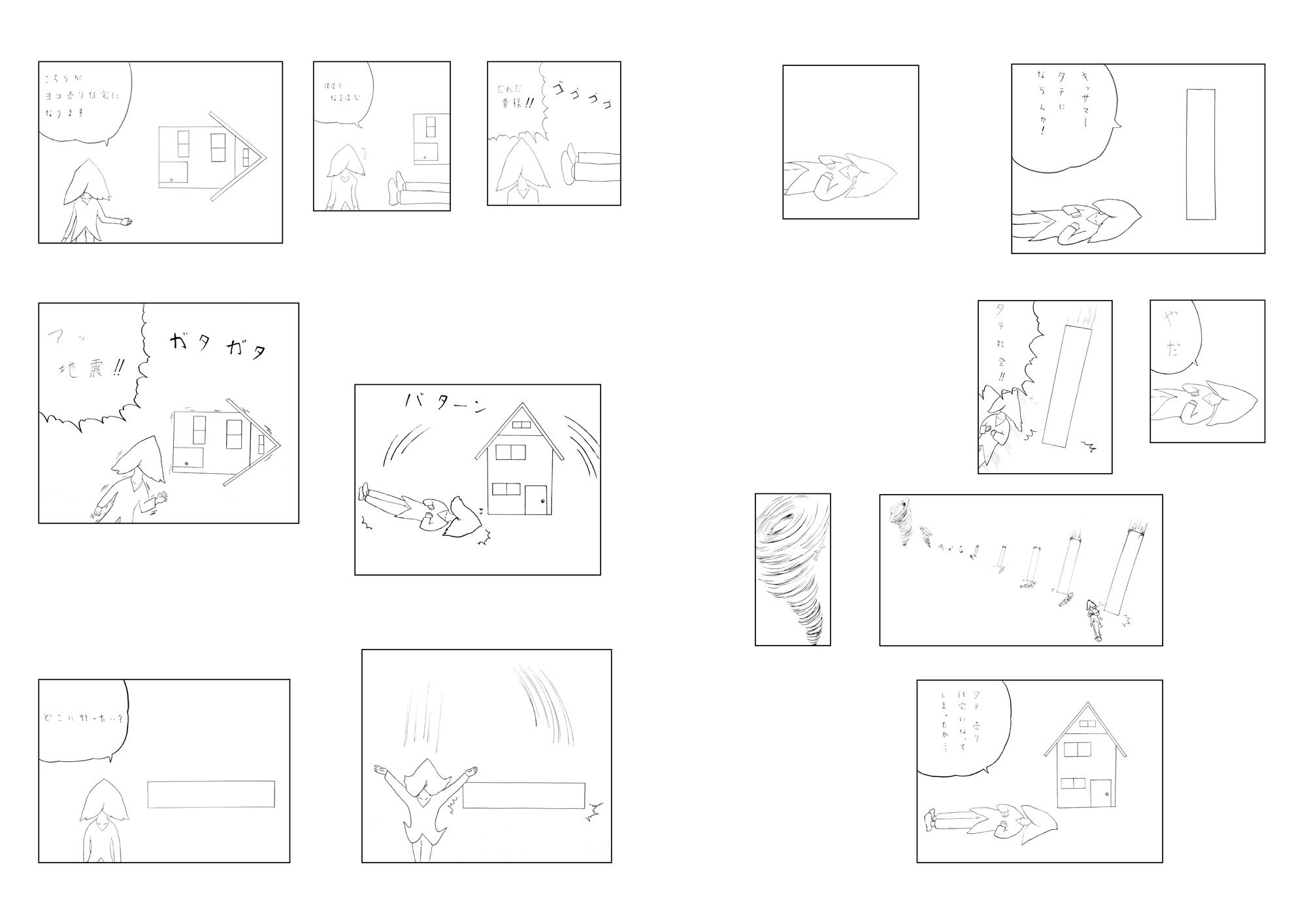
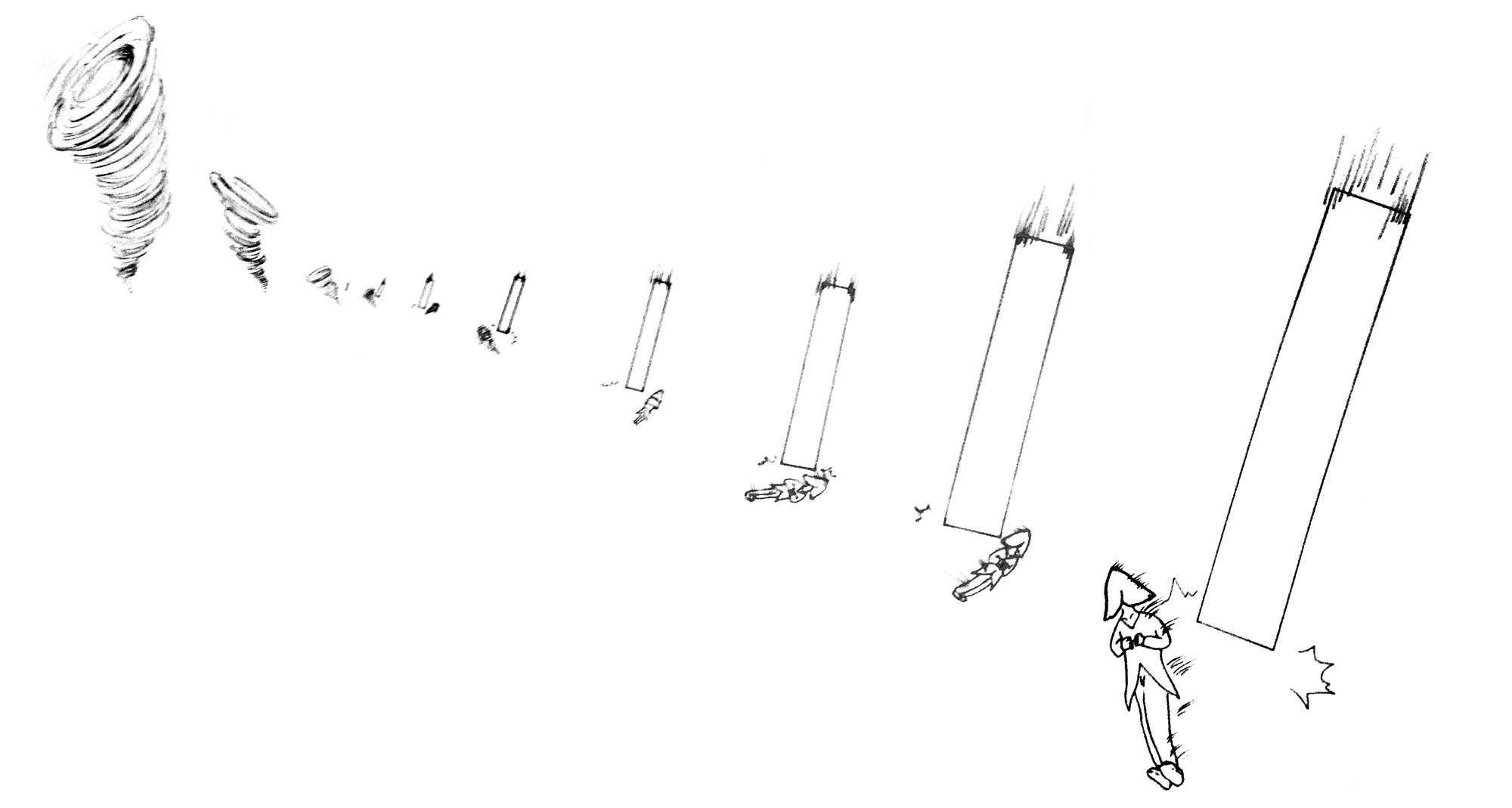
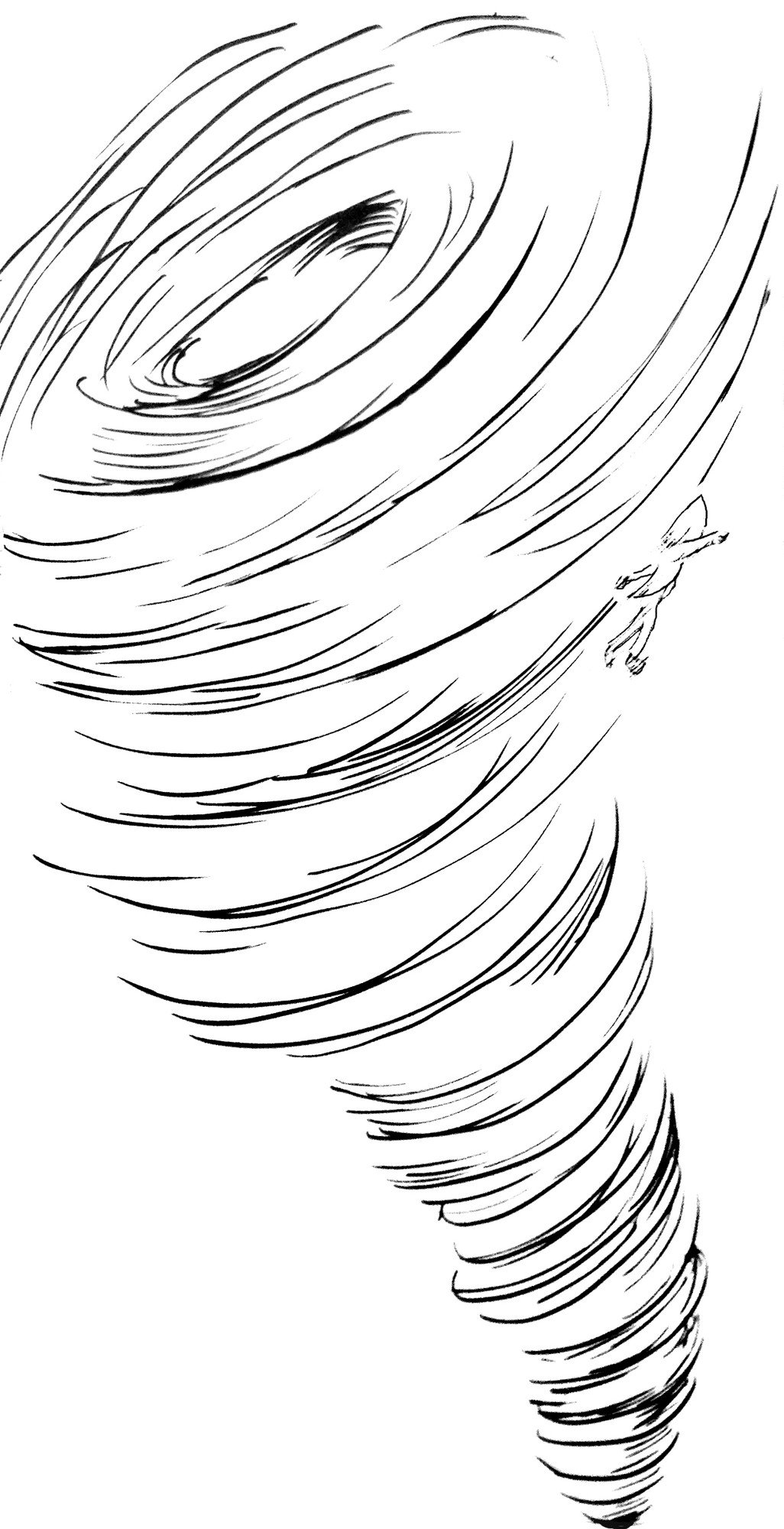
First exhibited in 2010 at LESS BREAD! MORE TAXES! MORE BREAD! LESS TAXES!, an exhibition by TARKY Toshima and Masayuki Yoshida at Gallery Objective Correlative.
This work grew out of that familiar question: could we dismantle, or rather reconstruct, the format of “manga” to create different axes of time and space? In other words, this work could be seen as an extension and development of the problematique explored in Burororororo, exhibited a little earlier: the temporal and spatial continuity and discontinuity between panels and text in manga.
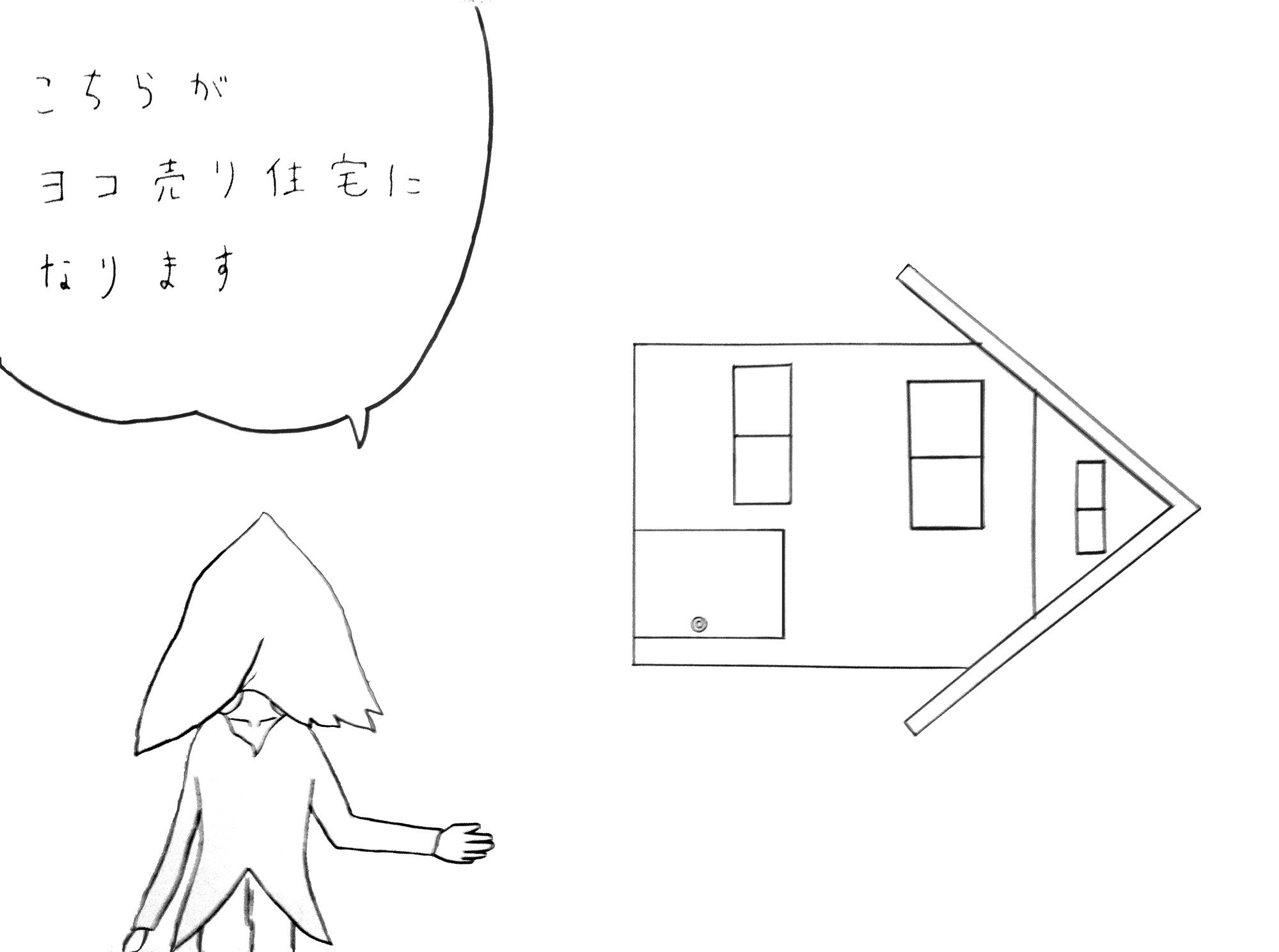
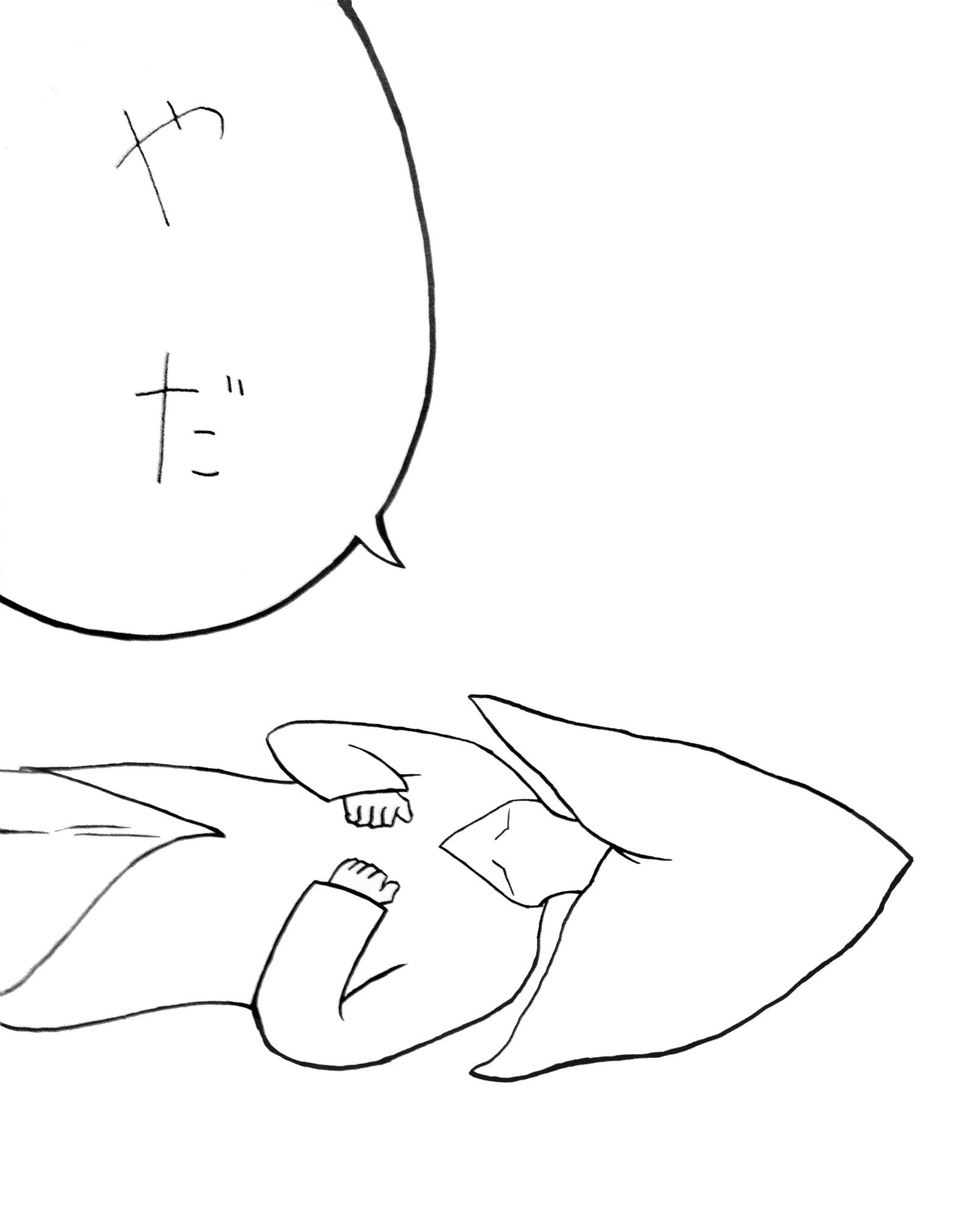
The work deals with themes on a formal level, such as vertical and horizontal, rotation, and up and down, as well as themes on a social level, including hierarchical society, ready-built housing, and the threats posed by nature. Or rather, that's basically what happens when you turn things into gags. But allow me to sound a bit pretentious and say that this is precisely where the potential of “laughter” lies—or so the artist says.
Incidentally, this exhibition was where Toshima and Yoshida first met. Without it, the later formation of O,1,2nine would never have happened. Thinking about that, chance, or perhaps the ties that connect people, can be a frightening thing.
A note on the title
The title itself involves a Japanese wordplay. Yokouri Jutaku is a playful alteration of tateuri-jutaku (建売住宅), the Japanese term for a ready-built house built for sale. The word tate in tateuri (建て売り) means “building” or “built,” but it sounds the same as tate (縦), meaning “vertical.” By replacing it with yoko (横), meaning “horizontal,” the title transforms tateuri-jutaku into the invented expression yokouri-jutaku. The pun cannot be reproduced directly in English, but it connects the work's play with vertical and horizontal forms to its social concerns, particularly hierarchical society and housing.