
I-Ta-Ta-Kai-Kai-Ta-Ta-Chi (井田田回回田田土)
2019 | Comedy / Performance
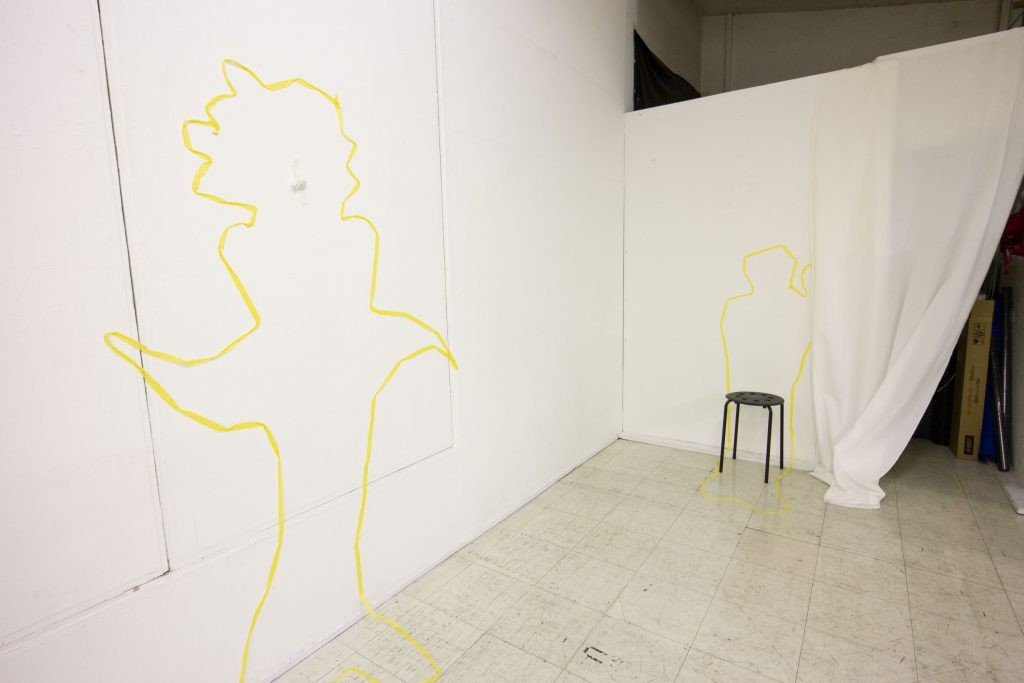
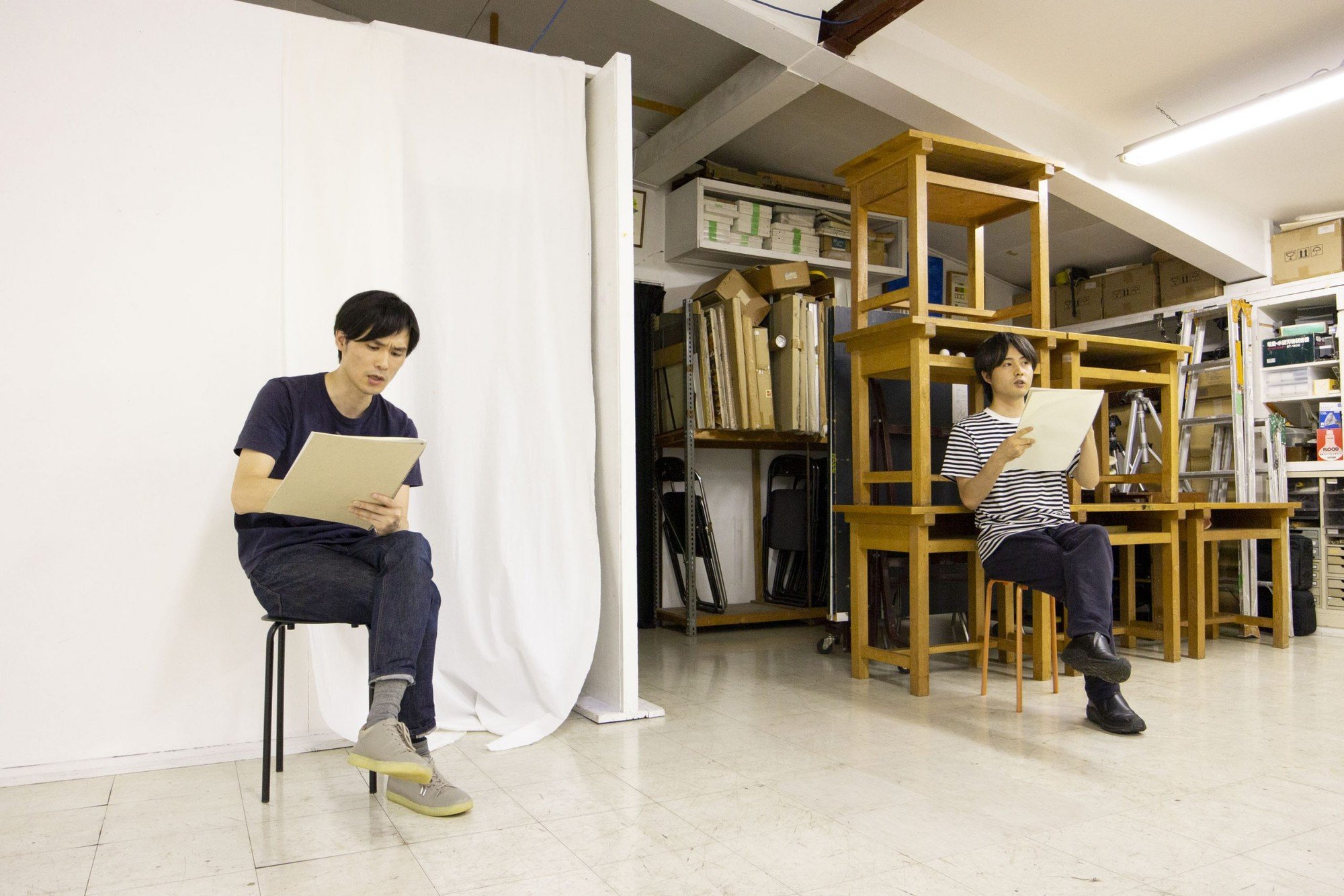
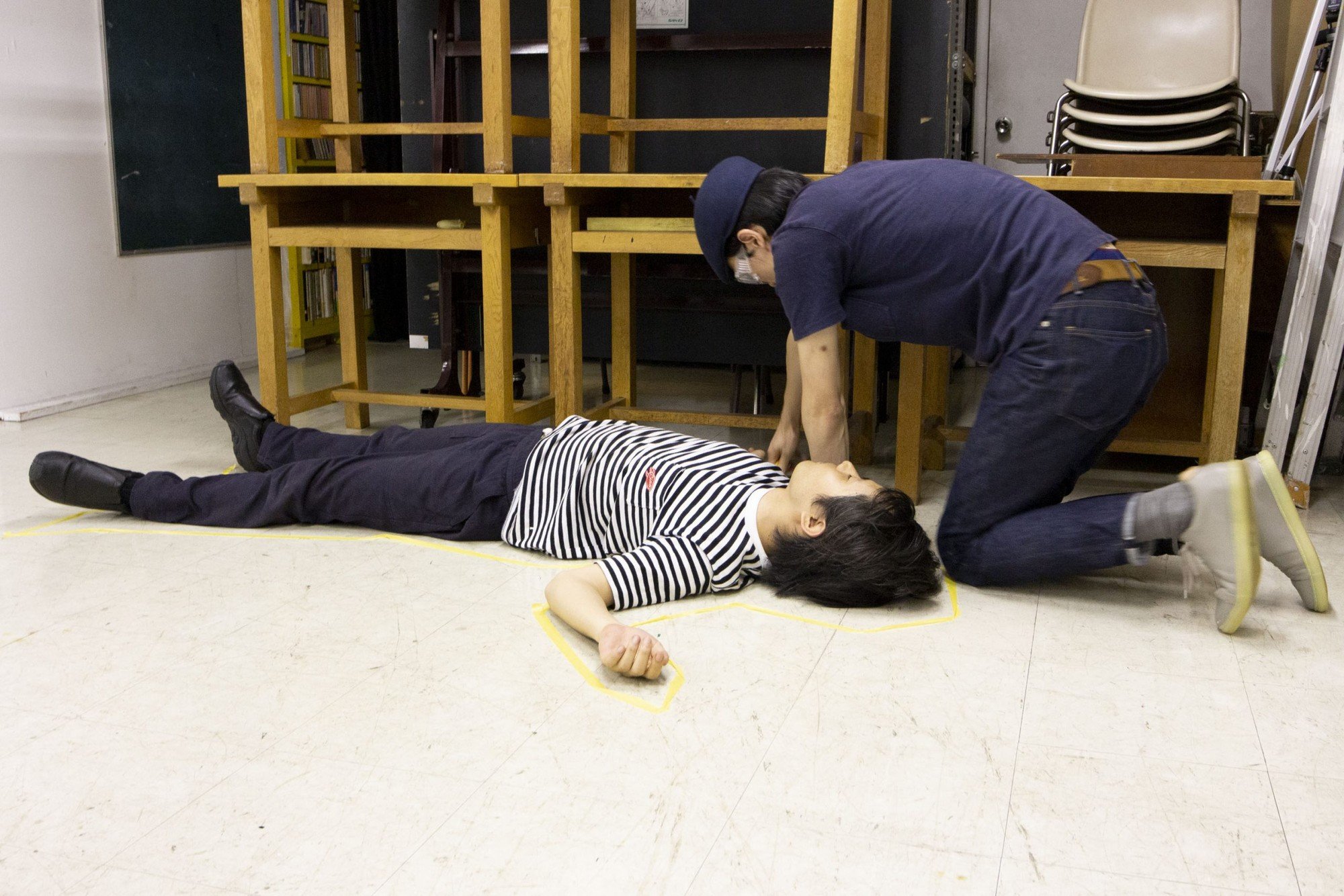
Performances with largely the same content were staged at two different venues, TALION GALLERY and blanClass. But the spaces were different, so naturally the performances changed, too. What stayed the same was, well...
The communication that takes place at the instant people cross paths on an escalator, while repeatedly going up and down the stairs. Are there more downward slopes or upward slopes? Or perhaps it is a matter of counting how many there are on the other side and on this side.
A human body being excavated, and something that looks like an eyeball. Wait, look at it carefully. You were a courtroom sketch artist. No, that's not right. You're a “Victim Detective” (gaisha tantei). That's it. Let's put up the tape.
Cultural and Linguistic Notes for English Readers
1. The Title: I-Ta-Ta-Kai-Kai-Ta-Ta-Chi
The title consists of a sequence of Japanese kanji: 井田田回回田田土. Rather than forming an ordinary Japanese phrase, the characters create a visually striking arrangement of repeated, box-like and geometric forms.
The individual characters have their own meanings:
- 井 (i): a well; visually, a shape resembling a grid.
- 田 (ta or da): a rice field, conventionally represented by a square divided into smaller sections.
- 回 (kai): to turn or go around; the character also resembles a square enclosing another square.
- 土 (read here as chi; usually tsuchi): earth or soil.
The romanized title is a reading guide, not a semantic translation of the whole sequence. Its rhythm comes from the repeated sounds, while its visual effect comes from the shapes of the written characters.
The sequence can also be considered alongside the related performance title Me-Ta-Ta-Kai-Kai-Ta-Ta-Haku (目田田回回田田白), which changes the first and final characters while preserving the repeated middle structure.
2. The Two Venues
The performances were presented at TALION GALLERY in Mejiro, Tokyo, and at blanClass in Yokohama. Although the content was largely the same, the artist's description emphasizes that the different spaces inevitably changed the performances.
TALION GALLERY is a contemporary art gallery founded in Yanaka, Tokyo, in 2011, before relocating to Mejiro in 2014. blanClass, established in 2009, operated from a small space in a residential neighborhood of Yokohama, in premises that had previously been used for contemporary art education. Its program included live events and public interviews, with an emphasis on dialogue and exchange.
Sources:
- TALION GALLERY, Information
- blanClass, Introduction
- blanClass, Event: I-Ta-Ta-Kai-Kai-Ta-Ta-Chi
3. Courtroom Sketch Artists and the “Victim Detective”
A courtroom sketch artist draws scenes from legal proceedings. In Japan, photography and recording inside courtrooms are generally restricted, making drawings an established way of depicting courtroom scenes in news coverage.
The next role, gaisha tantei (ガイシャ探偵), is an invented-sounding “Victim Detective.” In Japanese criminal-investigation slang, gaisha (ガイシャ) means the victim of a crime; it is a shortened form associated with higaisha (被害者, victim). The word also sounds somewhat like kaisha (会社, company), though the pronunciations are not identical.