
Return to the 0.1,2 and a half tatami mats
2023 | Comedy / Performance, Video
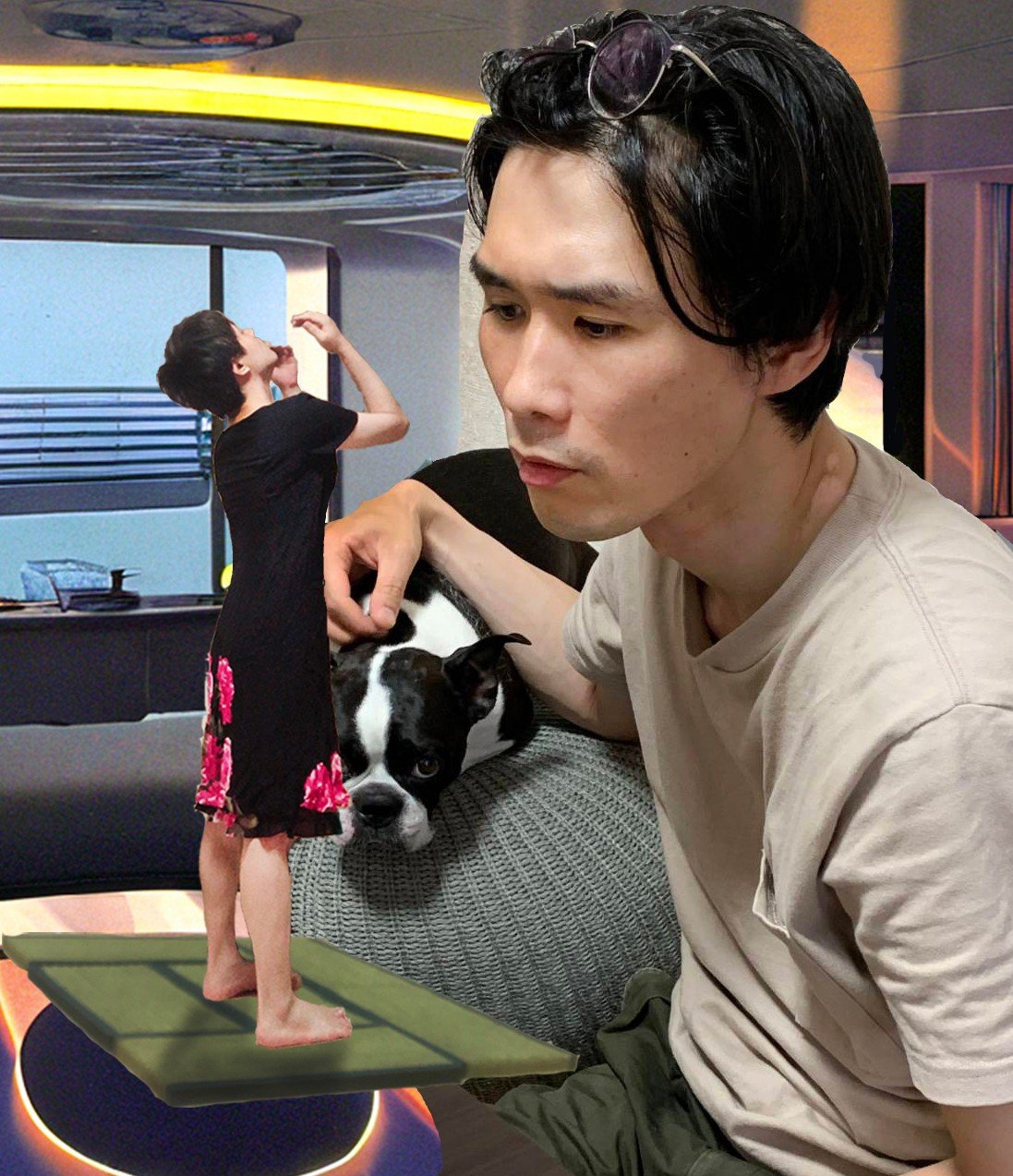
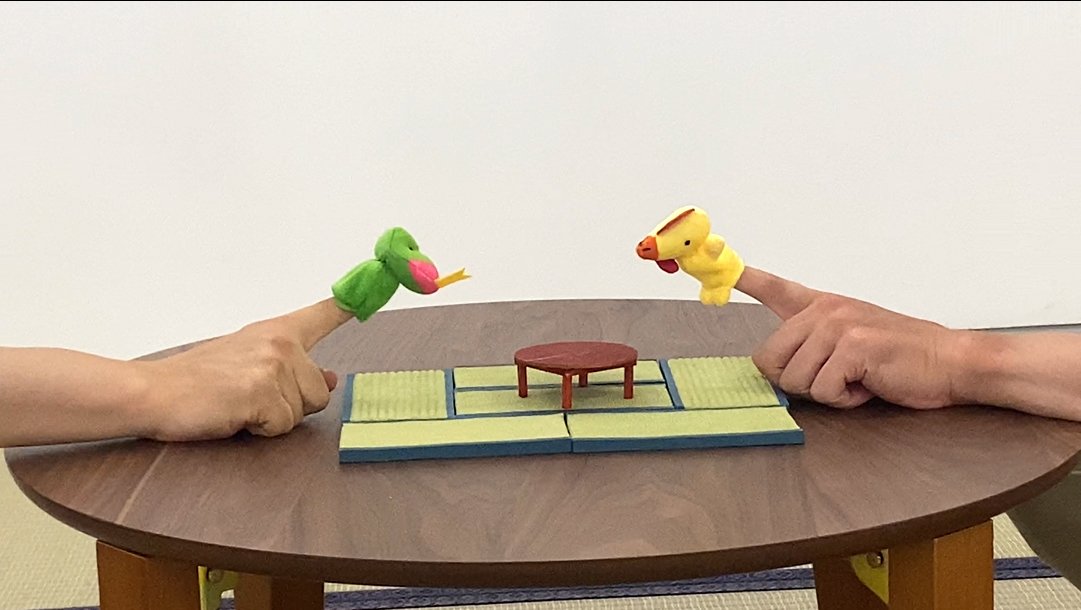
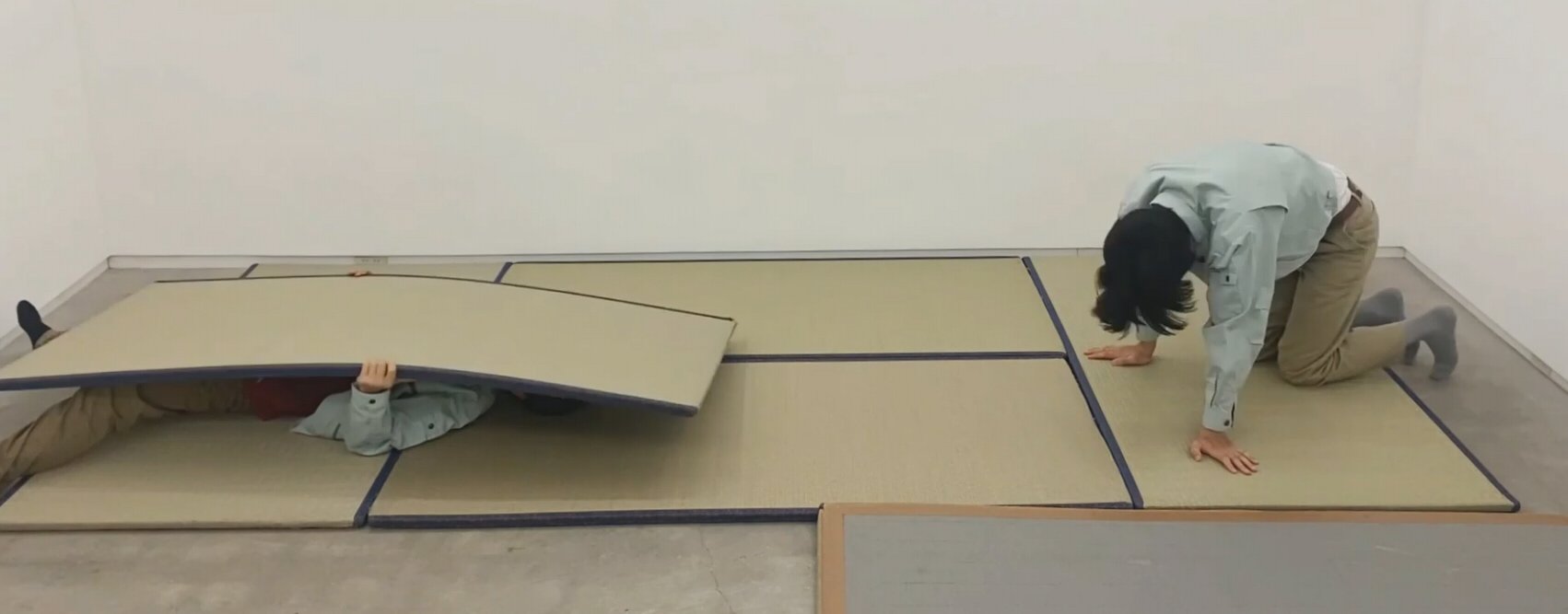
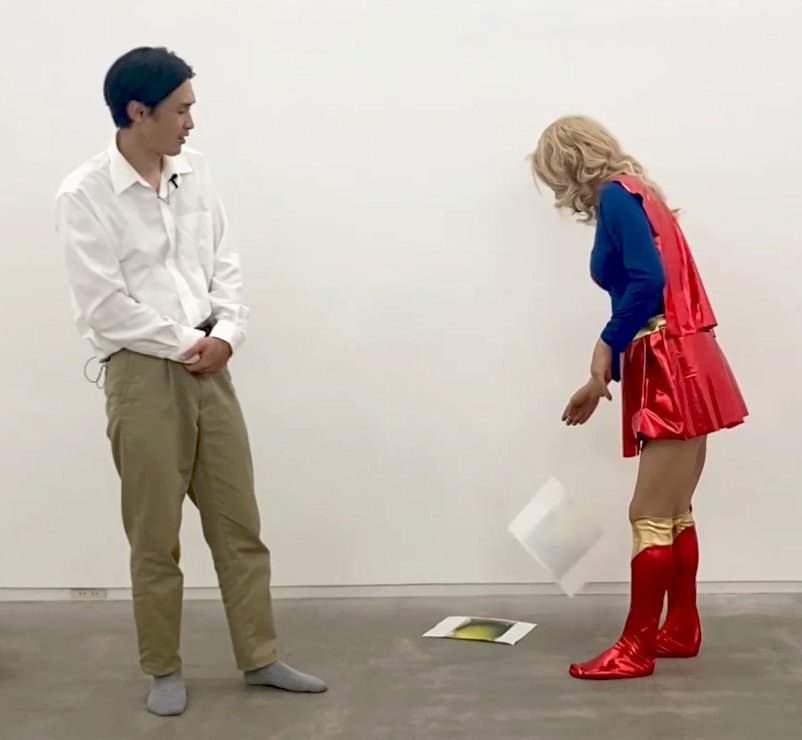
A farce that gets the family living room buzzing; rice and a Japanese-language dictionary; Superwoman and Tsuburaya Productions; bigness and smallness; a grand adventure inside a finger puppet; and, finally, a return to farce. Such is this online comedy sketch. The size of an apple painted inside a René Magritte painting, the size of a tatami mat—I mean, you can't really tell how big something is inside a picture, right? It's only ever relative to whatever you compare it with. Along with that kind of problem, and with gender subtly tangled up in it too, there are still times when nothing works out unless you flip the chabudai after all, Toshima muttered alone.
"I hope this has turned out to be a 'family shippē-gaeshi comedy': people growing bigger and smaller on tatami; words being parroted back, followed by a Swallow Return and then a chabudai flip, until a grand reversal seems about to happen, only for it not to happen after all. A comedy in which kindness is repaid with harm, and harm with kindness. I keep coming back to this thought, again and again." (From the announcement for “Return to the 0.1,2 and a half tatami mats”)
Cultural and Linguistic Notes for English Readers
1. The Title: A Room Measured in Tatami Mats
In Japan, traditional rooms are often described by the number of tatami mats that fit on the floor. A room measuring four and a half tatami mats, for example, is a familiar size in Japanese domestic life. The title, however, replaces the usual number with “0.1,2,” so that the room becomes “0.1,2 and a half tatami mats.”
The notation echoes the performers' name, O,1,2nine, while turning the familiar idea of a room measured in tatami mats into something strange. The title is therefore best left in its deliberately peculiar form rather than normalized into a conventional room measurement.
2. A Chain of Returns and Reversals
The announcement strings together several Japanese expressions built around the idea of returning, repeating, or reversing something.
- Ōmu-gaeshi (parroting): repeating another person's words back to them, like a parrot.
- Tsubame-gaeshi (Swallow Return): the name of a sword technique traditionally associated with the swordsman Sasaki Kojirō. Here, it also contributes to the sequence of expressions involving a return or reversal.
- Chabudai-gaeshi (flipping the low dining table): literally overturning a short-legged table used for dining in a Japanese-style room. The expression can also refer to abruptly overturning an arrangement or sending things back to square one.
- Donden-gaeshi (a sudden reversal): an unexpected turn in which a situation is dramatically overturned.
The comedy builds its verbal momentum through this chain. Each expression introduces another kind of return or reversal, until a reversal appears imminent and then somehow fails to occur.
3. What Does Shippē-gaeshi Mean?
The phrase shippē-gaeshi, written 竹篦返し, usually means retaliating immediately or returning a similar treatment to the person who dealt it. Its traditional image is that of striking back with a bamboo implement called a shippē.
In the announcement, however, it appears in the coined phrase "family shippē-gaeshi comedy." The phrase is immediately paired with two familiar Japanese expressions: repaying a kindness with harm, and repaying harm with kindness. The direction of repayment keeps reversing, making the family relationship itself part of the comedy's back-and-forth structure.
4. Chaban and Ochanoma: Farce Meets the Family Living Room
The Japanese sentence moves from chaban (茶番), meaning a farce or a transparently staged performance, to ochanoma (お茶の間), the family living room or everyday shared space in a home. The similar sounds and the shared character 茶, meaning tea, create a small verbal connection between farce and domestic life.
This association helps place the comedy between theatrical absurdity and the familiar space of family life. English cannot reproduce the wordplay directly, so the main translation preserves the contrast between farce and the family living room, while this note explains the Japanese phrasing.
5. From Rice and Dictionaries to Superheroes and Finger Puppets
The description lists a series of seemingly unrelated elements: rice, a Japanese-language dictionary, Superwoman, Tsuburaya Productions, bigness and smallness, and an adventure inside a finger puppet. It then returns to farce.
Tsuburaya Productions is a Japanese film and television production company known internationally for the Ultraman franchise and its special-effects fantasy productions. The contrast between Superwoman and Tsuburaya Productions brings superhero imagery and Japanese special-effects entertainment into the same list.
The sequence does not provide a single explanatory thread connecting every item, and the translation does not impose one. Instead, the list moves among everyday objects, language, popular entertainment, changes in scale, and an unexpectedly expansive adventure inside something tiny. Its return to farce echoes the repeated returns and reversals in the preceding sentence.