
bid
2013 | Text / Manga / Publication
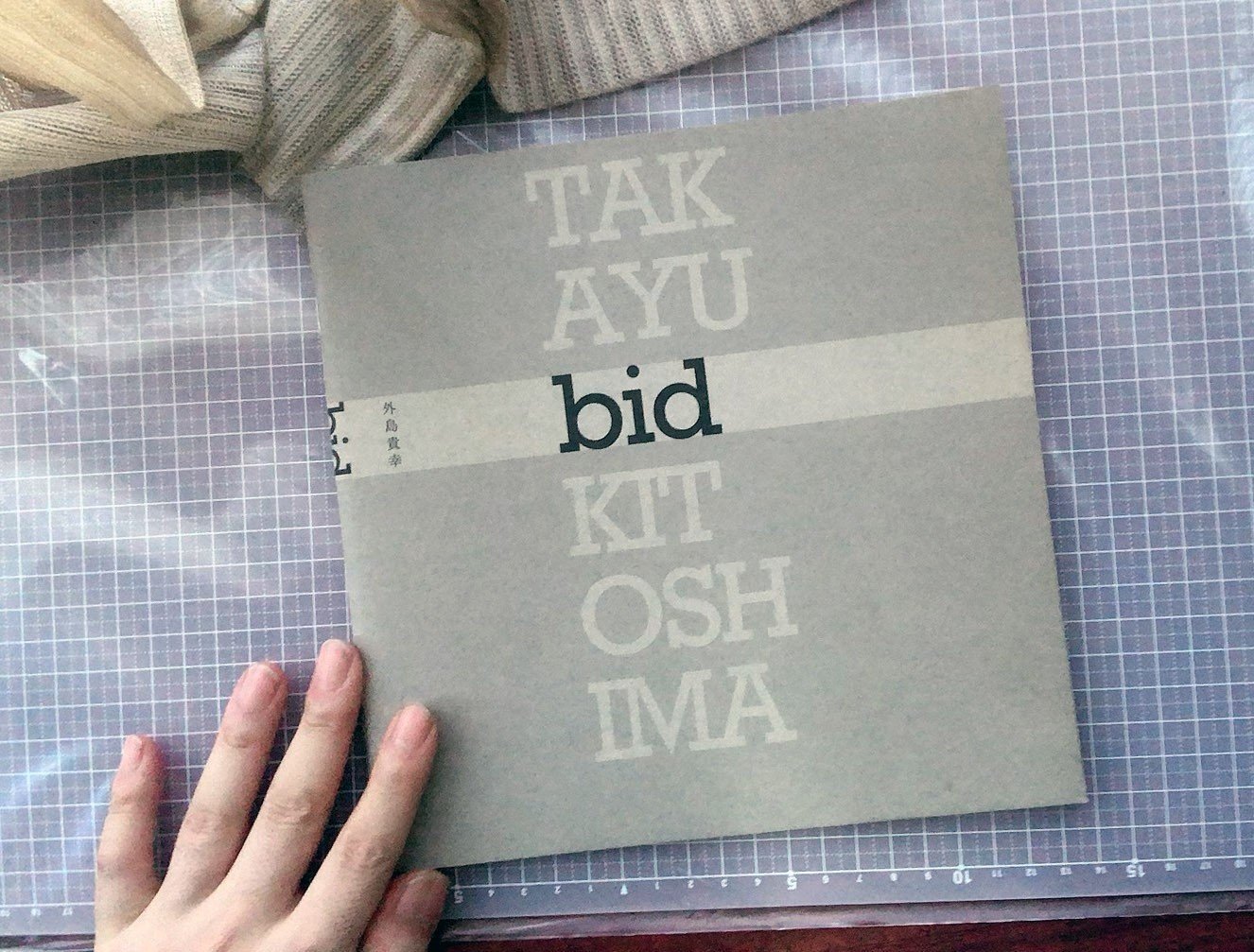
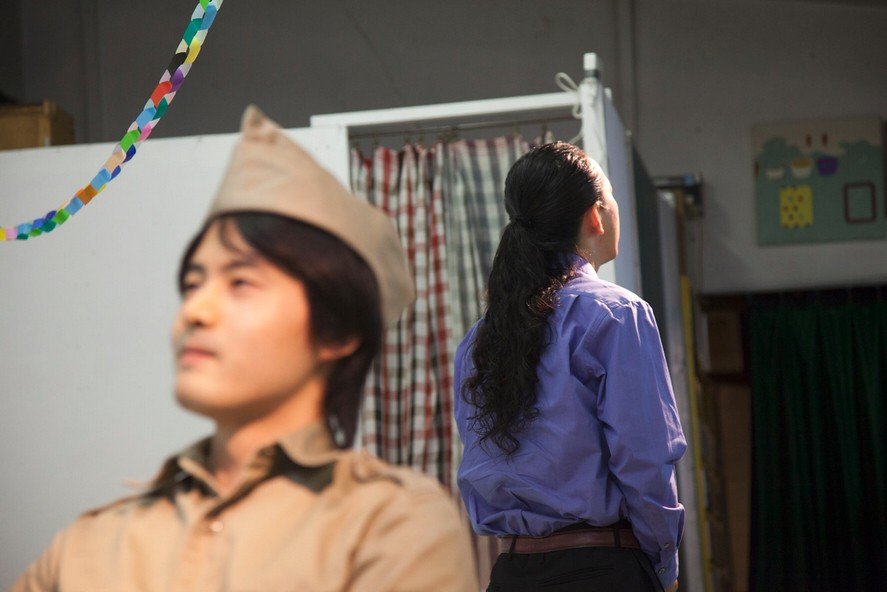
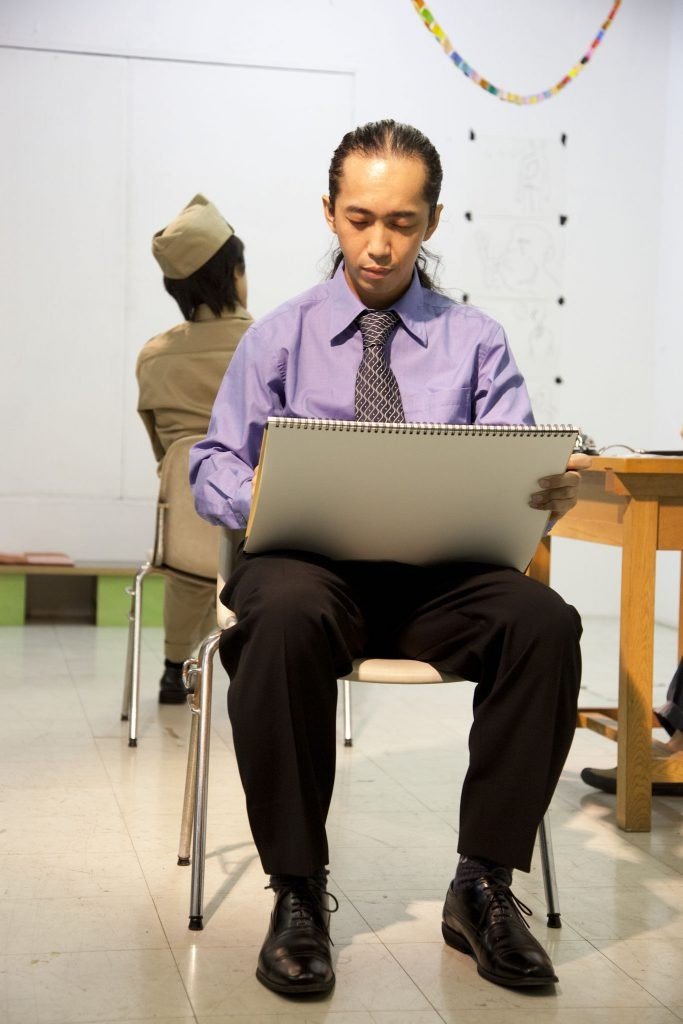
Photo: blanClass (2, 3)
bid is an artist book by Tatsuo Majima and TARKY Toshima. It consists of novels, four-panel manga, and graphic works, although the novels are its main component. As explained in the introduction below, the two artists wrote their novels by giving each other a prompt and responding to it. Toshima gave Majima the prompt “Petty Offender,” while Majima gave Toshima the prompt “Company.”
Majima's novel takes the form of “the autobiography of a contemporary artist from Ireland.” In keeping with the prompt “Petty Offender,” it depicts the artist's performances, artworks, and actions at the very edge of what is legally permissible. The novel also draws on provisions of Japan's Minor Offenses Act, although it will probably leave a powerful impression even on readers unfamiliar with the law.
Toshima's novel depicts the extraordinary ambitions of an extraordinarily timid office worker, and the eventual realization of those ambitions. It develops its narrative by expanding on the associations evoked by the word “company” alone. To say that it takes the Tower of Babel, a symbol of human desire, as its motif makes the whole thing sound rather dubious. But the novel turns that dubiousness itself into part of the gag (or rather, isn't that what a gag is?), and probably ends up imploding “company” all the way through and breaking out of it in its own dubious fashion.
---Below, from the introduction---
An artist book combining novels, graphic works, and four-panel manga, created by Tatsuo Majima and TARKY Toshima through an exchange of prompts. The rules were as follows:
1. Each artist gives the other a prompt about which the recipient has no prior knowledge.
2. Each responds to the prompt with a work of approximately thirty pages of Japanese manuscript paper (genkō yōshi).
Following these rules, Majima wrote a novel based on the prompt “Petty Offender,” while Toshima wrote one based on “Company.” Originally, the plan was to publish only the novels. During the production process, however, the two began swapping their prompts to create four-panel manga, and producing graphic works based on each other's novels. The result was an artist book combining a variety of elements.
The book's layout accommodates two different directions of reading. Toshima's novel is printed horizontally, to be read from left to right, while Majima's novel is printed vertically, with lines read from top to bottom and the text progressing from right to left. The book was therefore designed as a square so that both reading directions could coexist within a single volume.
A performance and talk event was also held at blanClass to celebrate the publication. For the performance, Masako Immaki, who designed and edited the book, gave the two artists prompts to which they responded spontaneously. Drawing on each other's novels, Toshima dressed like a US serviceman, while Majima wore clothing resembling that of an office worker.
Cultural and Linguistic Notes for English Readers
1. Japanese Manuscript Paper: Genkō Yōshi (原稿用紙)
The instruction to write approximately thirty pages of genkō yōshi refers to a familiar way of measuring the length of a Japanese manuscript. Traditional manuscript paper commonly uses a grid of 20 columns by 20 rows, with one character occupying each square. A full sheet therefore holds 400 characters.
Thirty such sheets represent approximately 12,000 character spaces, although the actual amount of text varies with paragraph breaks, punctuation, and other formatting conventions. This gives the reader a better sense of the scale of the writing task than the number of pages alone.
2. The Minor Offenses Act
The prompt given to Majima was “Keihanzai-sha” (軽犯罪者), which may be translated as “petty offender” or “person who commits a minor offense.” The novel refers to Japan's Minor Offenses Act (Keihanzai-hō, 軽犯罪法), a law that defines a range of relatively minor offenses and their penalties.
Reference: Japan's Minor Offenses Act, e-Gov Japanese Law Search.
3. The Tower of Babel
The description identifies the Tower of Babel as a motif symbolizing human desire. In the biblical story, people attempt to build a tower reaching heaven; the episode has subsequently become a familiar reference point for ambition, overreaching, and the limits of human projects.
4. Reading in Two Directions
Japanese books can use horizontal writing, read from left to right, or traditional vertical writing, in which lines run from top to bottom and progress from right to left. These conventions shape not only the direction in which text is read, but also how a reader approaches a book and moves through its pages.
In bid, the two novels retain different reading directions: Toshima's is horizontal, and Majima's is vertical. The square format of 210 × 210 mm accommodates this difference within a single object.