
Whoa... This Person
2015 | Exhibition
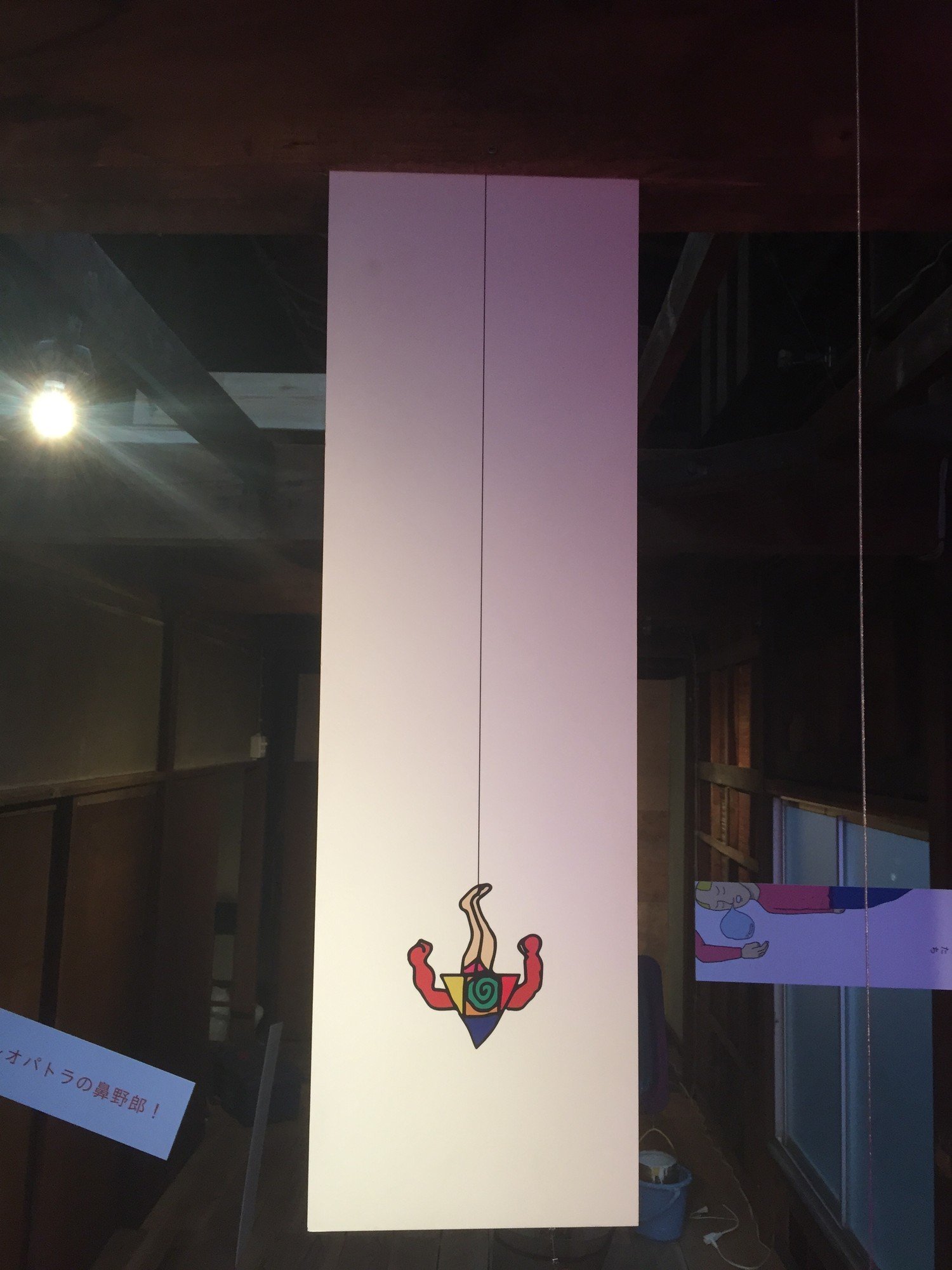
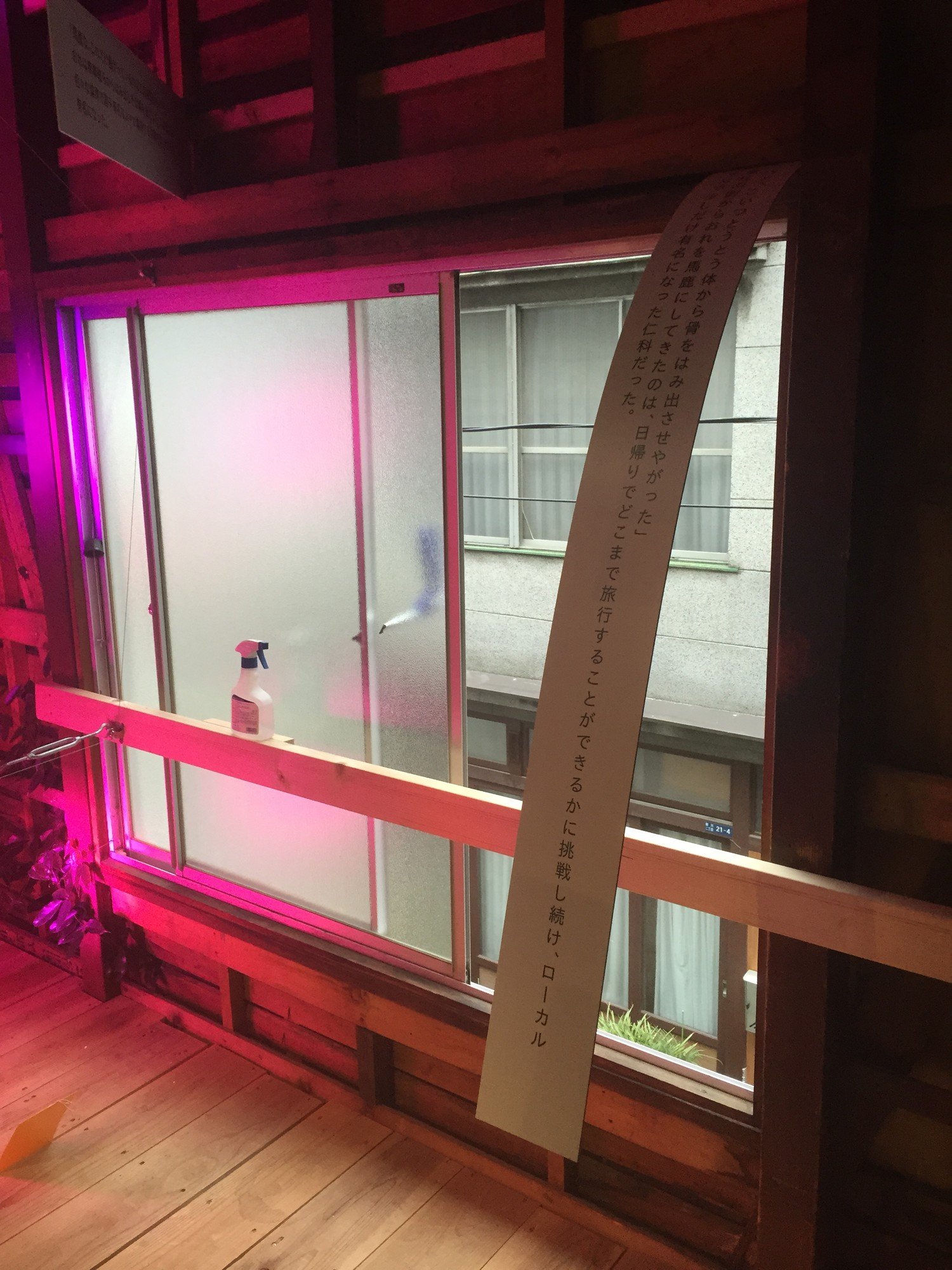
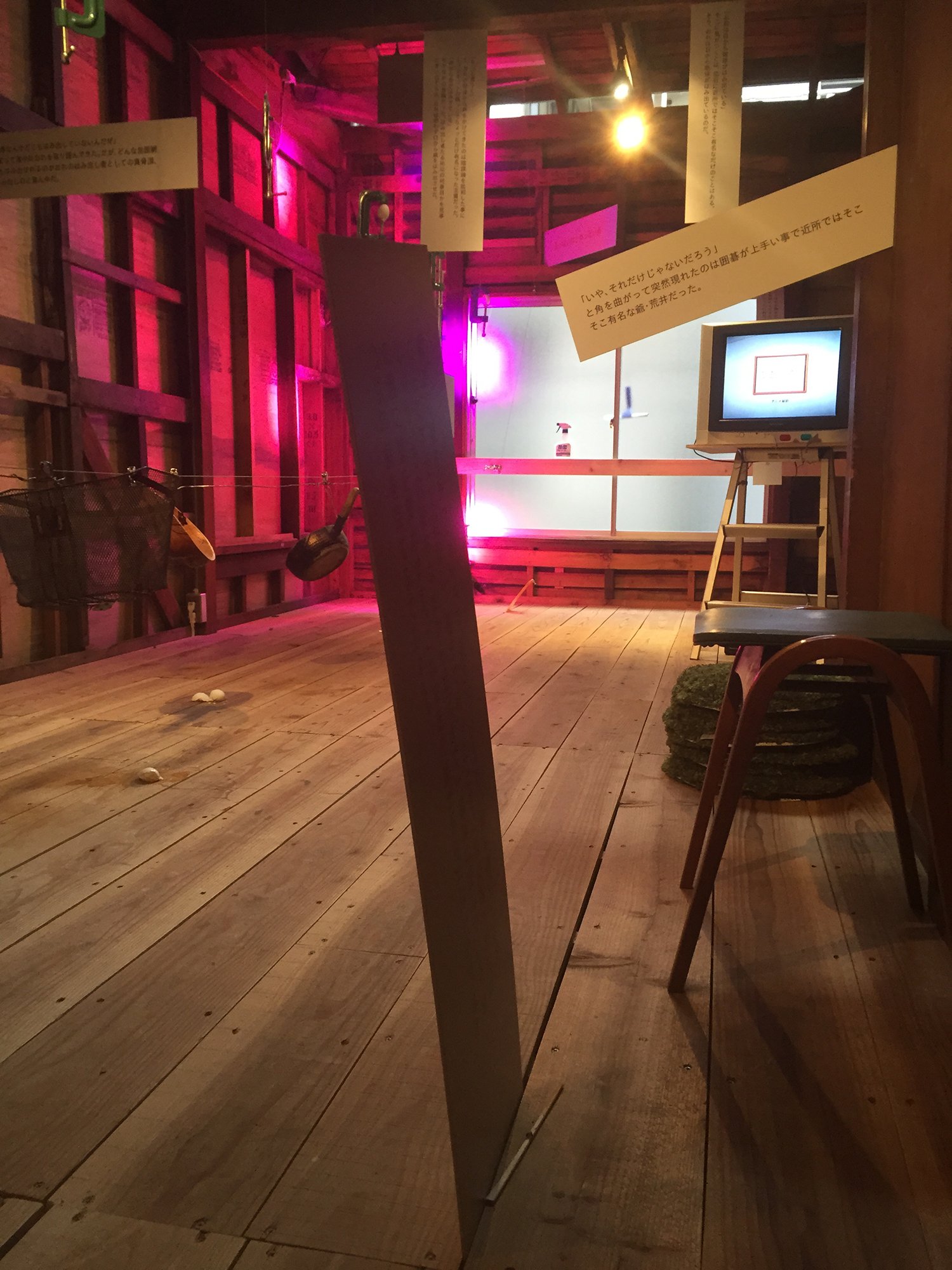
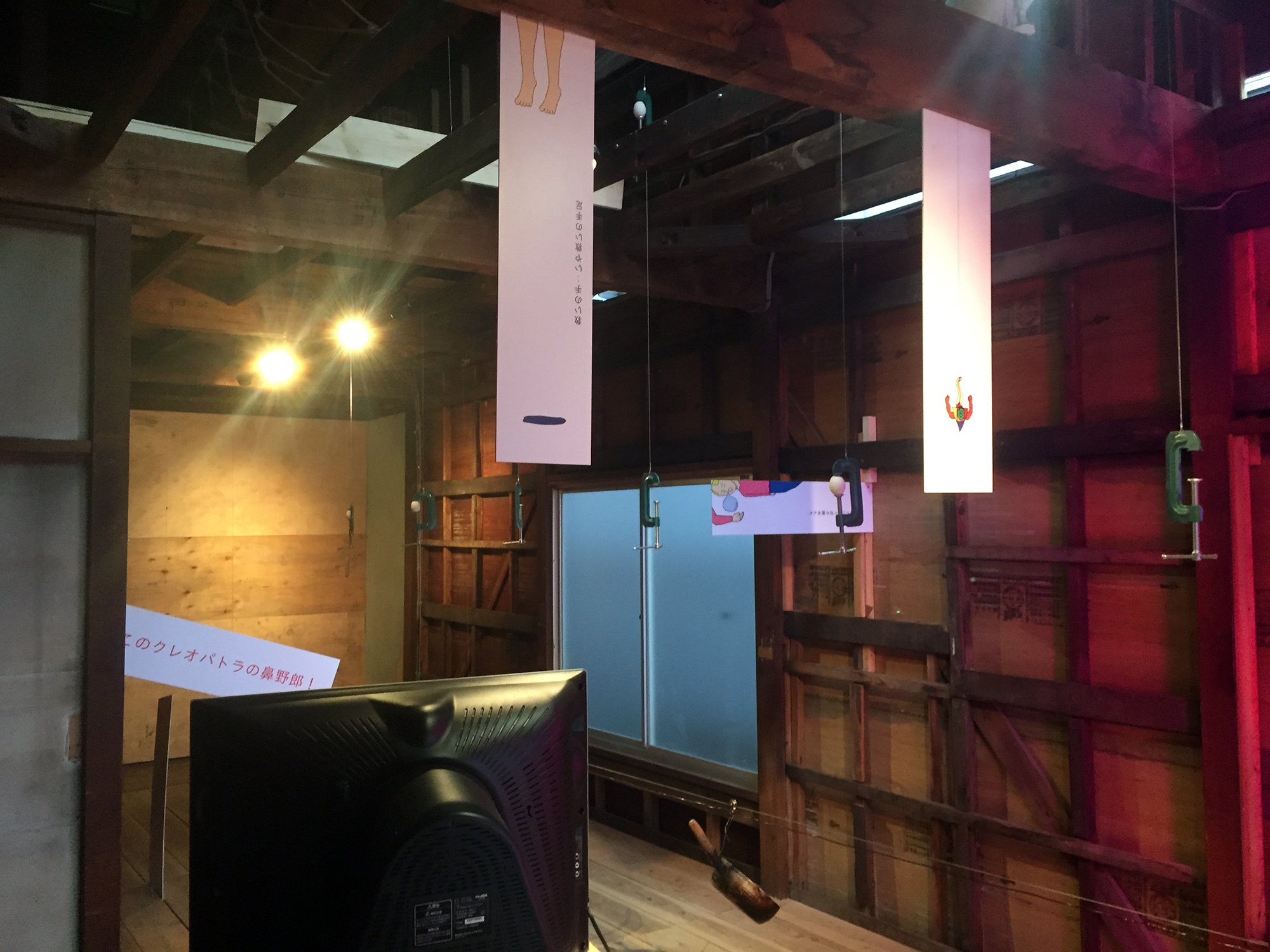
The work consists of a text written as a story about misfits, together with illustrations of various body parts and short phrases, printed on multiple laminated PVC sheets. The sheets can bend without breaking unless subjected to considerable pressure. Taking advantage of this flexibility, the pieces were installed in gaps in the gallery floor, between pillars, and in spaces between walls and other structural elements.
Since the text itself is about people who stick out, the works physically stick out from all sorts of places in the exhibition space.
Exhibited together with the video work Predicate/Postoperatively.
Cultural and Linguistic Notes for English Readers
1. The Title: Uwa... Kono Hito (うわ…この人)
Uwa... kono hito is a casual Japanese expression of surprise or dismay upon encountering someone. Depending on the situation and tone, it can convey anything from astonishment or awkward disbelief to mild disgust. It might be rendered in English as “Whoa... this person,” “Wow... this person,” or, in a more dismissive tone, “Ugh... this person.”
The phrase does not describe the person directly. Instead, it captures the speaker's immediate reaction to them, leaving the reason for that reaction unstated. The ellipsis adds to this effect: something about the person has caught the speaker's attention, but the speaker does not quite know what to say.
2. Hamidashimono (はみ出し者): The Misfit Who Sticks Out
The central concept of this work is hamidashimono, a Japanese term for a misfit, an outcast, or someone who does not fit into the expectations of a group or society.
The word is closely connected to hamidasu (はみ出す), meaning to stick out, protrude, spill over, or extend beyond a boundary. The suffix mono (者) means a person. Thus, hamidashimono describes someone who stands outside the expected limits of a social group, while its linguistic association with hamidasu also evokes something physically sticking out.
This connection is essential to the work. The text tells a story about people who do not fit in, while the physical pieces themselves protrude from the architecture of the exhibition space.