
Kaburi-kigurumari
2016 | Comedy / Performance
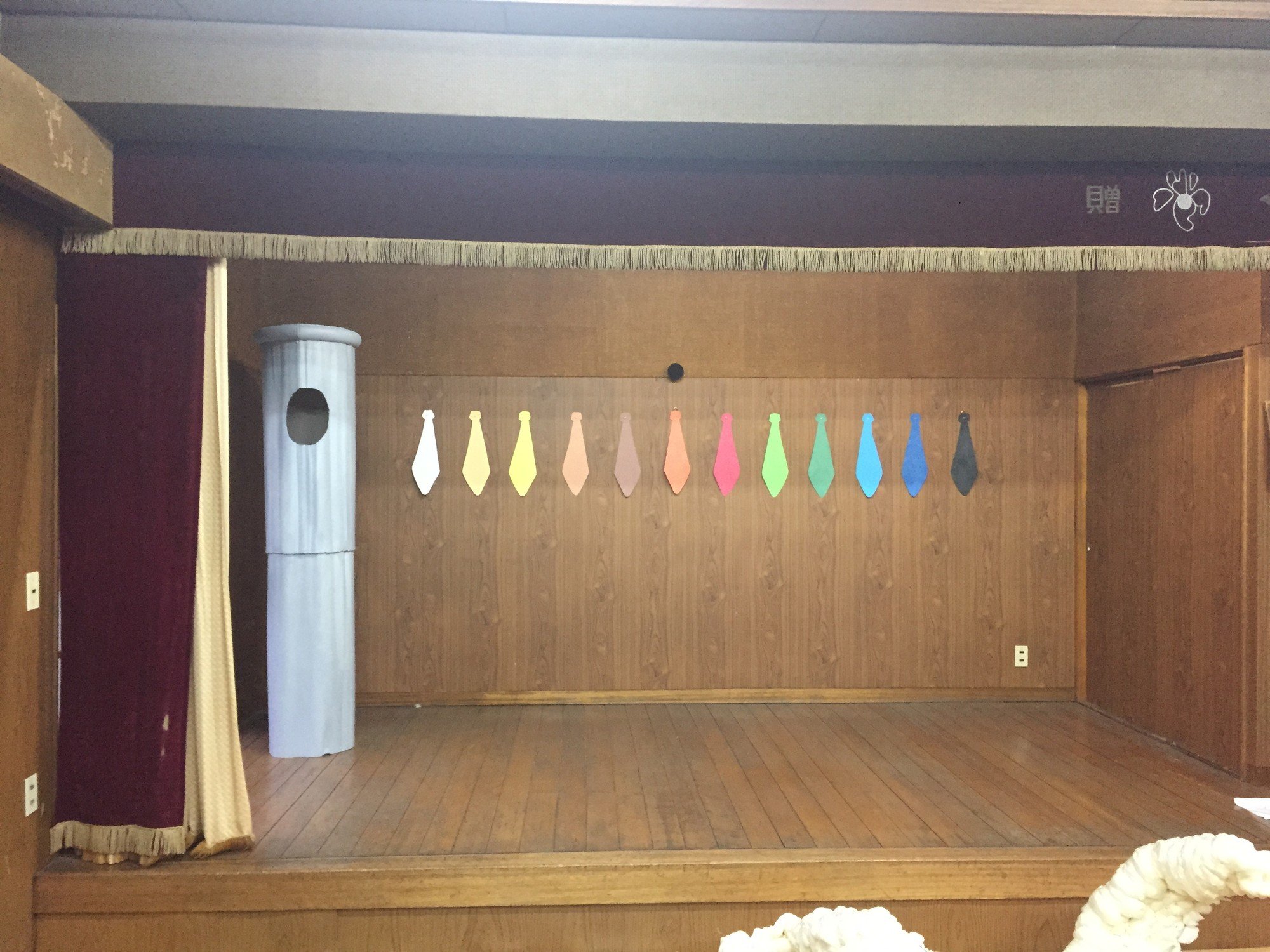
A comedy performance lasting around 40 minutes, presented over two days at Kamiya Community Hall.
The title Kaburi-kigurumari is derived from two Japanese words: kaburimono (かぶりもの), meaning something worn on the head, and kigurumi (着ぐるみ), a costume that covers the entire body. Kaburimono refers to those familiar items used in sketch comedy that create an instantly comic effect simply by putting them on. There was an intention to make this convention itself the conscious (and perhaps deliberately shameless?) subject of the sketch. But as we worked on it, things grew stranger and stranger, until a utility pole, a window screen, and some inexplicable, smoke-shaped thing ended up being used as “kigurumi” and “kaburimono.” Gohya Iijima made the costumes, TARKY Toshima wrote the script, and the two of them performed in the piece. I seem to remember that wearing the window screen was hard work.
A story of colorful neckties, clockwork springs, and a man who doesn't know his way.
Cultural and Linguistic Notes for English Readers
1. The Title: Kaburi-kigurumari
The title Kaburi-kigurumari is a coined expression derived from two Japanese words:
- Kaburimono (かぶりもの): something worn on the head, such as a headpiece or an oversized costume head used in comedy
- Kigurumi (着ぐるみ): a full-body costume that covers the performer, often resembling an animal, a fictional character, or another recognizable figure
The title combines elements of these words into an invented, slightly awkward-sounding expression. Rather than translating it into a conventional English title, the original sound is retained because the playful recombination is part of the work.
A kaburimono may transform only the performer's head or appearance, while a kigurumi encloses much or all of the body.
2. Costumes in Japanese Sketch Comedy
In Japanese sketch comedy (konto), a costume or headpiece can establish a comic situation immediately. The audience recognizes the visual gag before the performer needs to explain anything. Simply appearing in a conspicuous costume can already suggest a character or produce a laugh.
3. Performance Context: Beppu Art Month 2016
The official programme report for Beppu Art Month 2016 lists Kaburi-kigurumari as a two-day performance on November 12 and 13 at Kamiya Community Hall. The report describes it as a theatrical work using costumes, created by Gohya Iijima, then a resident artist at Kiyoshima Apartment in Beppu, and TARKY Toshima, an artist active in Tokyo.
Beppu Art Month was a city-wide programme presenting a range of cultural activities at venues throughout Beppu.
Source: BEPPU PROJECT, 2016 Annual Report, “Beppu Art Month 2016”.